The Massachusetts Child Support Guidelines, checked against federal law and the form’s own code
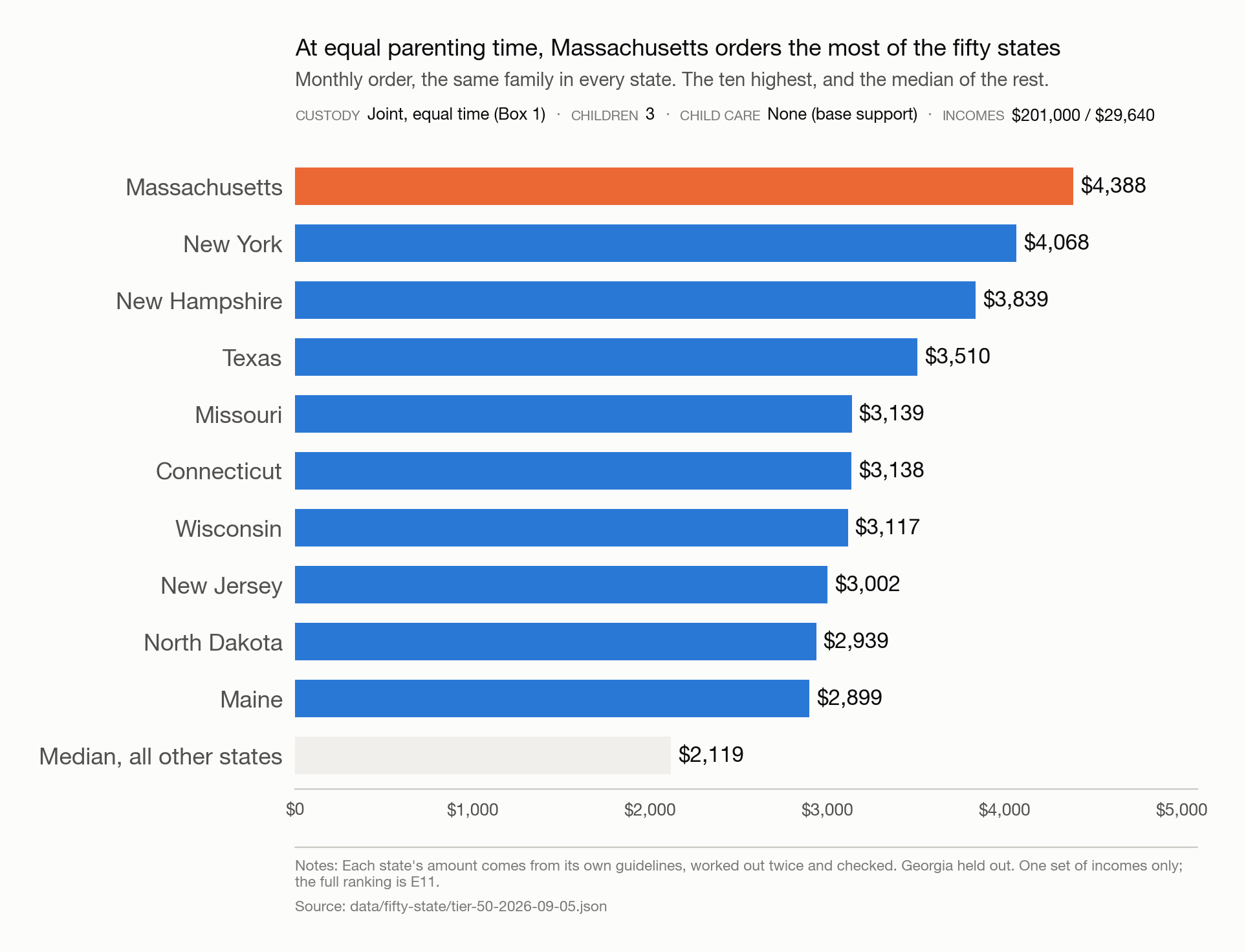
Massachusetts has the highest child support in the nation for joint custody.
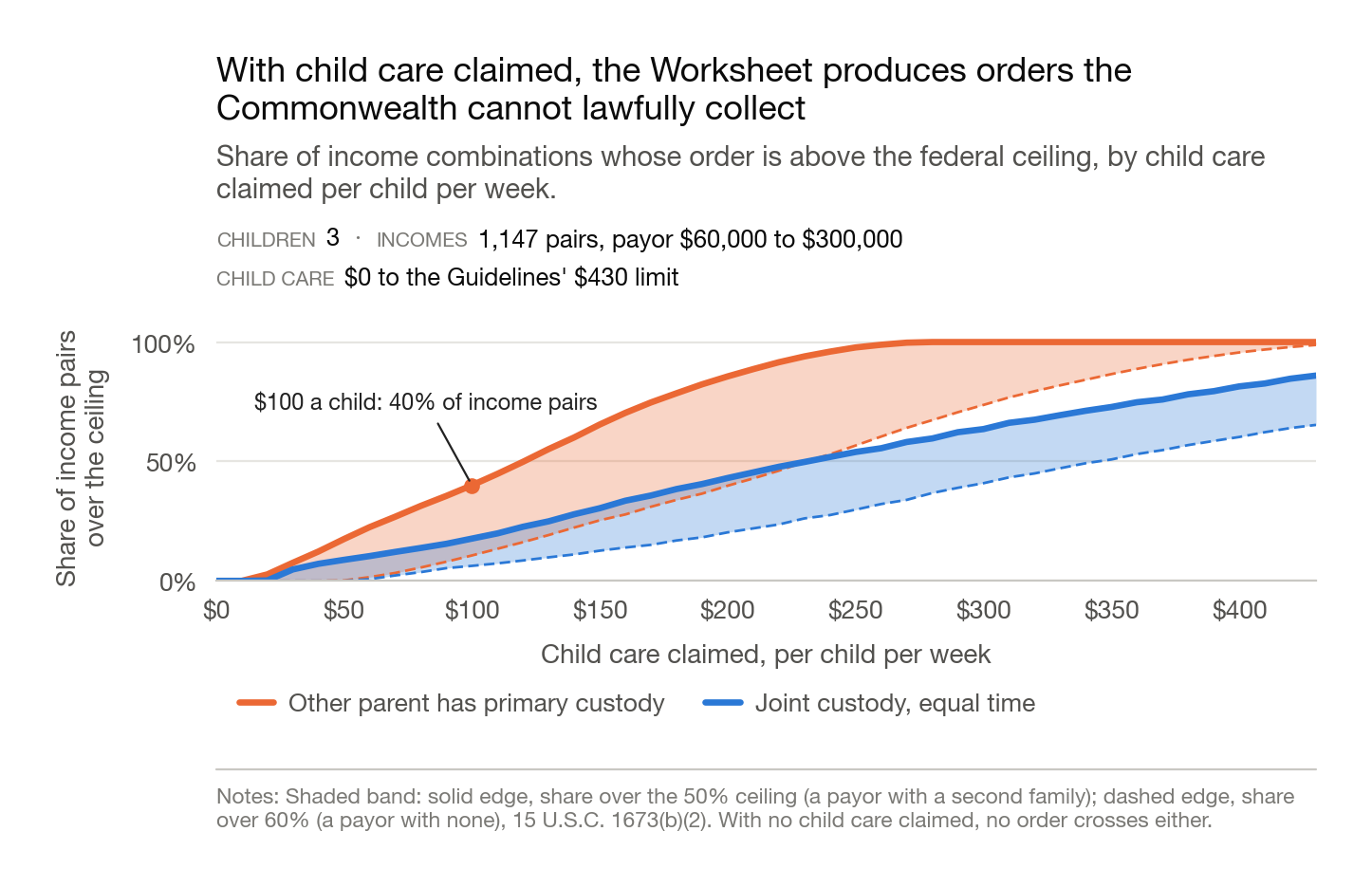
The state’s guidelines can set child support higher than federal law lets the state collect from wages.
Federal law requires every child support order to rest on the parent’s ability to pay. The Worksheet never computes what a parent keeps after tax, and federal law never says what ability to pay means once the basics are met. The excess above what federal law lets the state collect from wages is still owed.
No court or federal agency has ruled on whether the
guidelines meet this standard. Federal approval of the state’s plan has not addressed it.
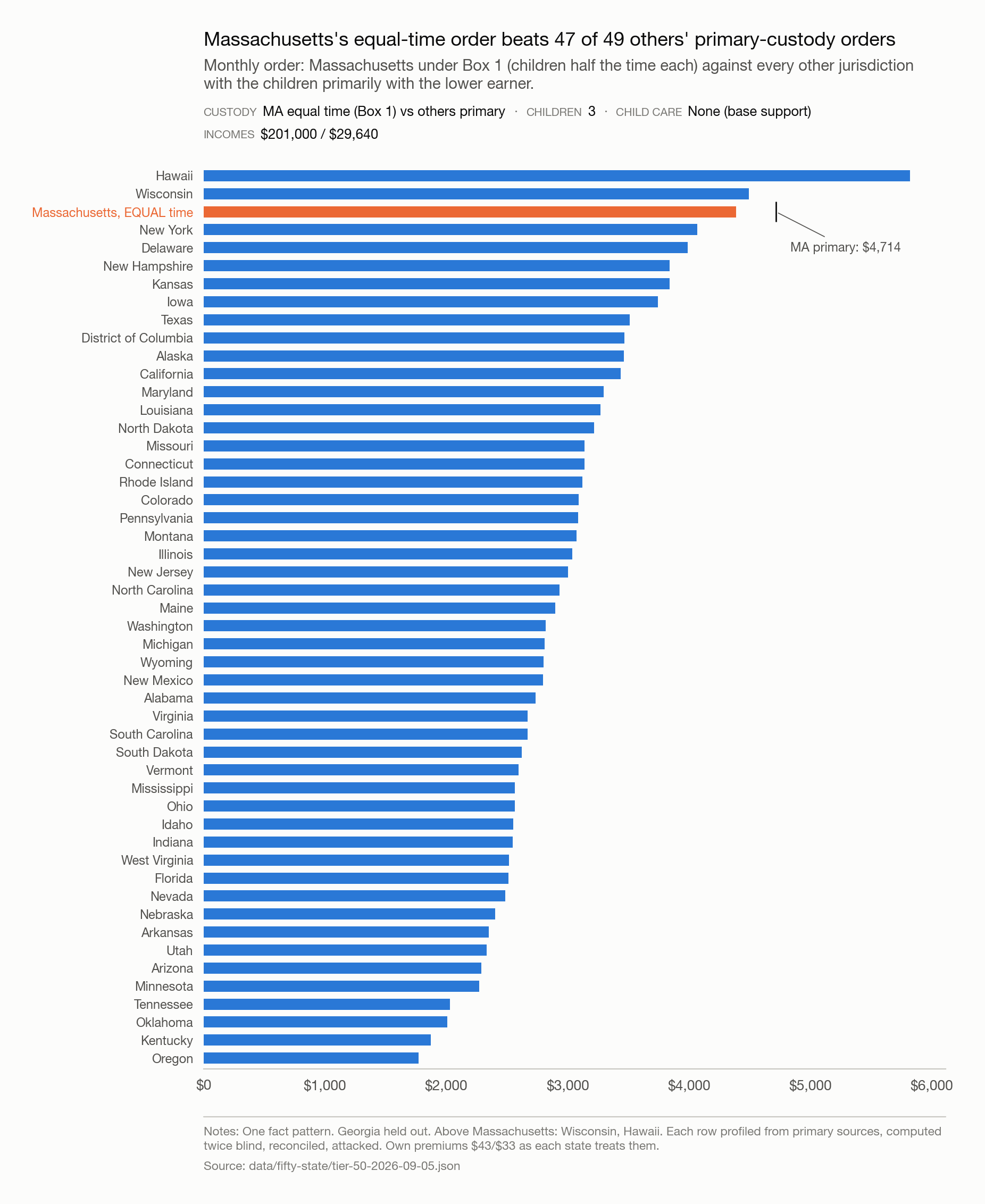
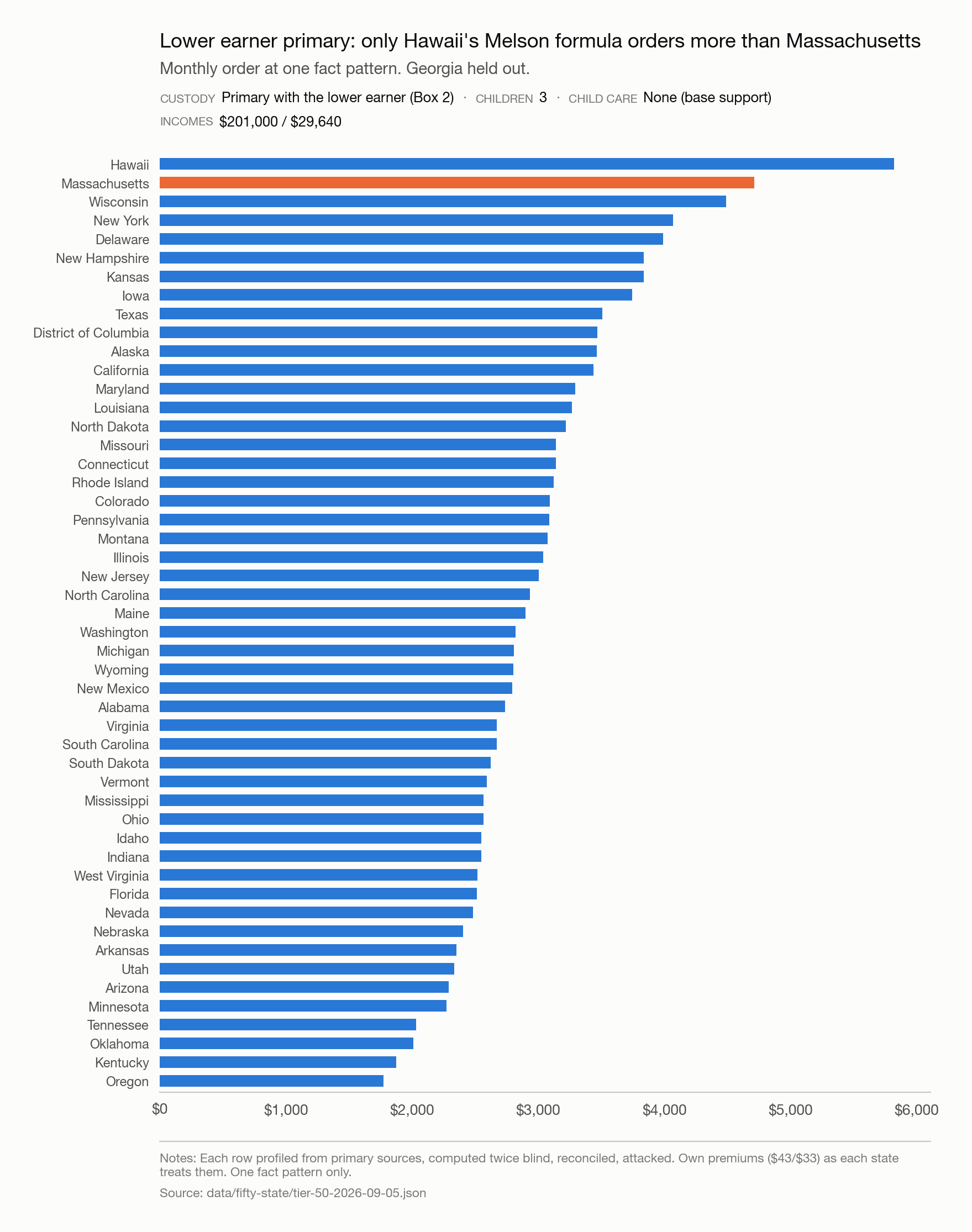
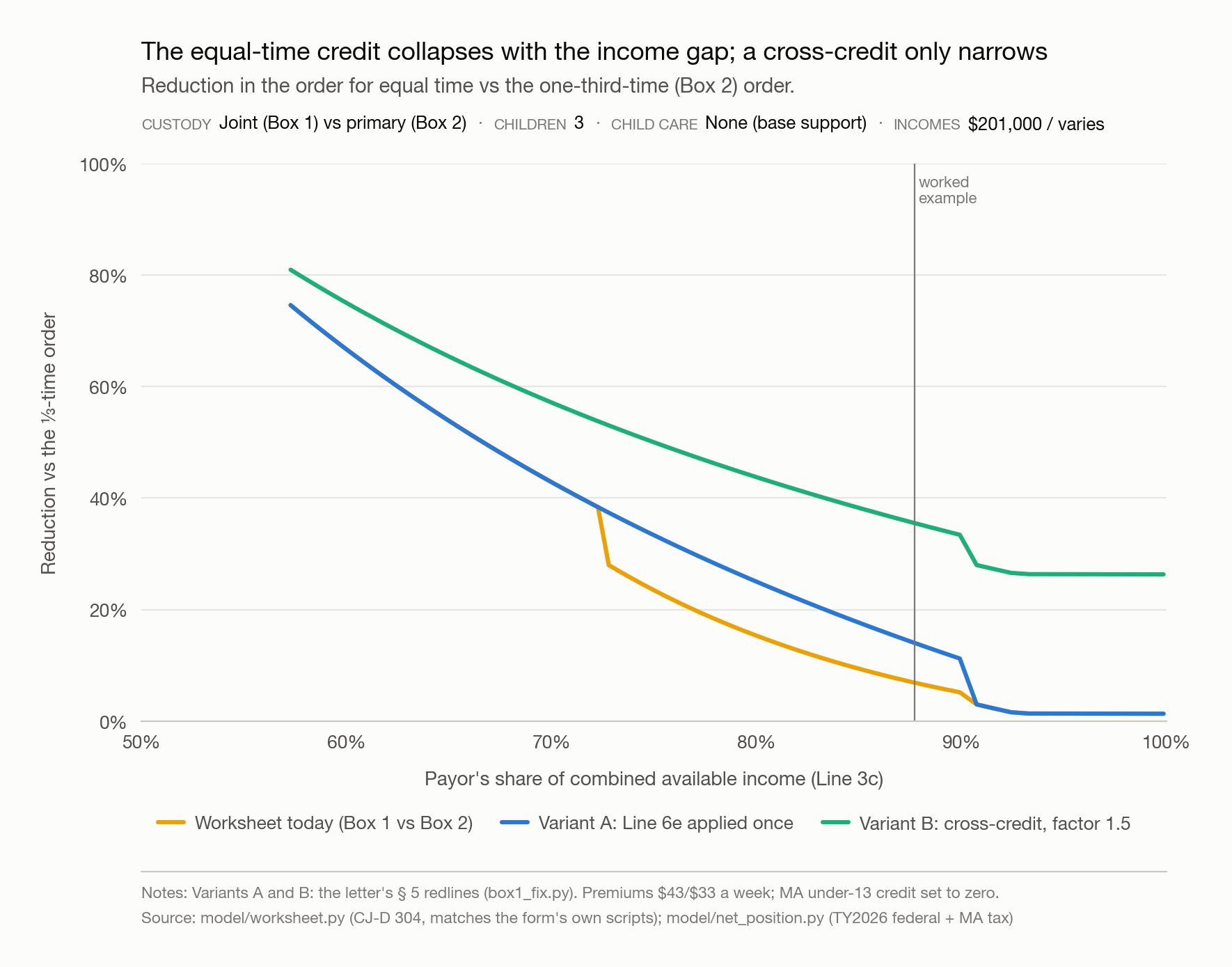
At one worked example ($201,000 and $29,640 a year, three children), Massachusetts orders more for joint custody than any other state, and more than primary custody costs in 47 states.
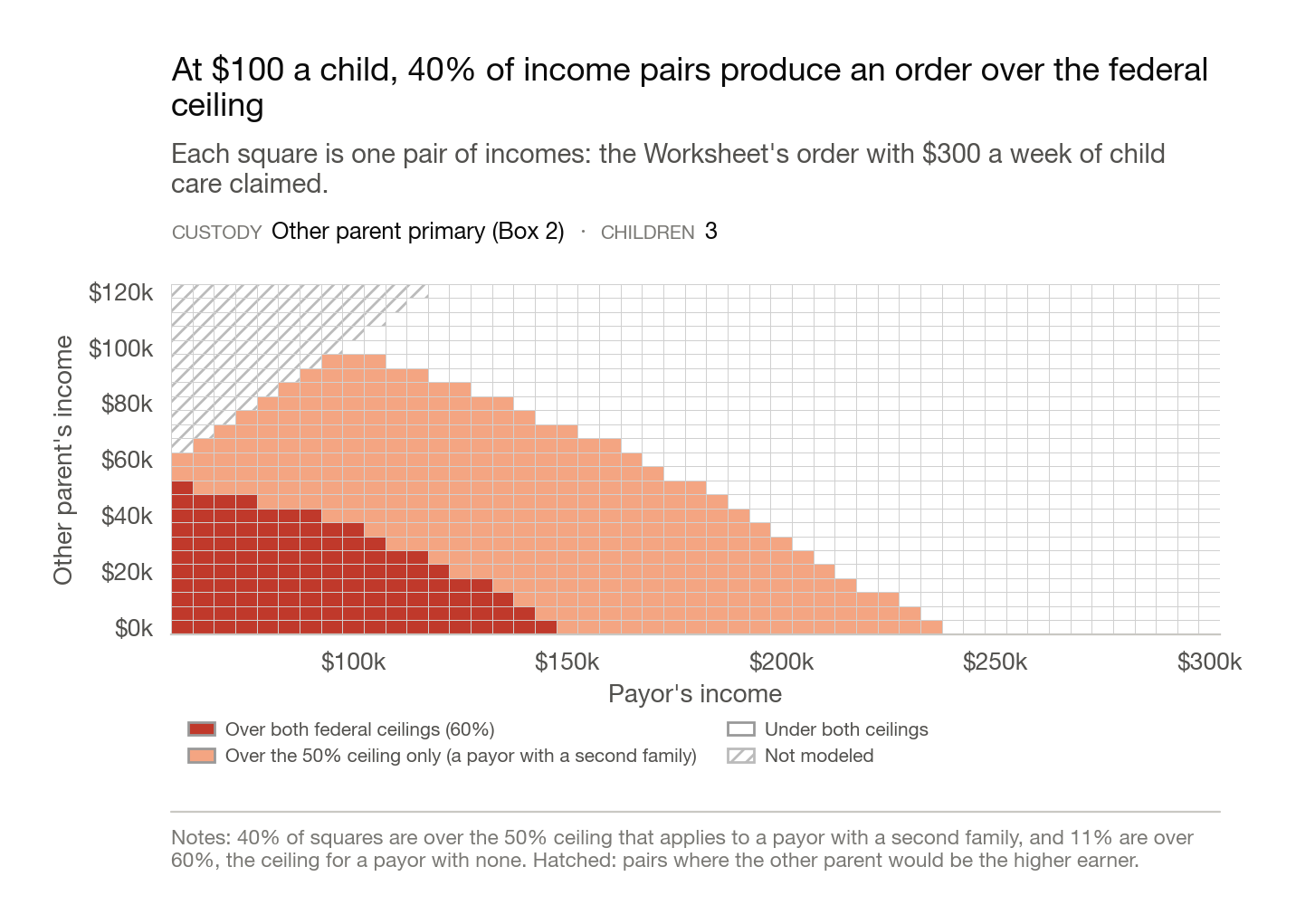
40%
the order takes more than half of take-home pay
10.6%
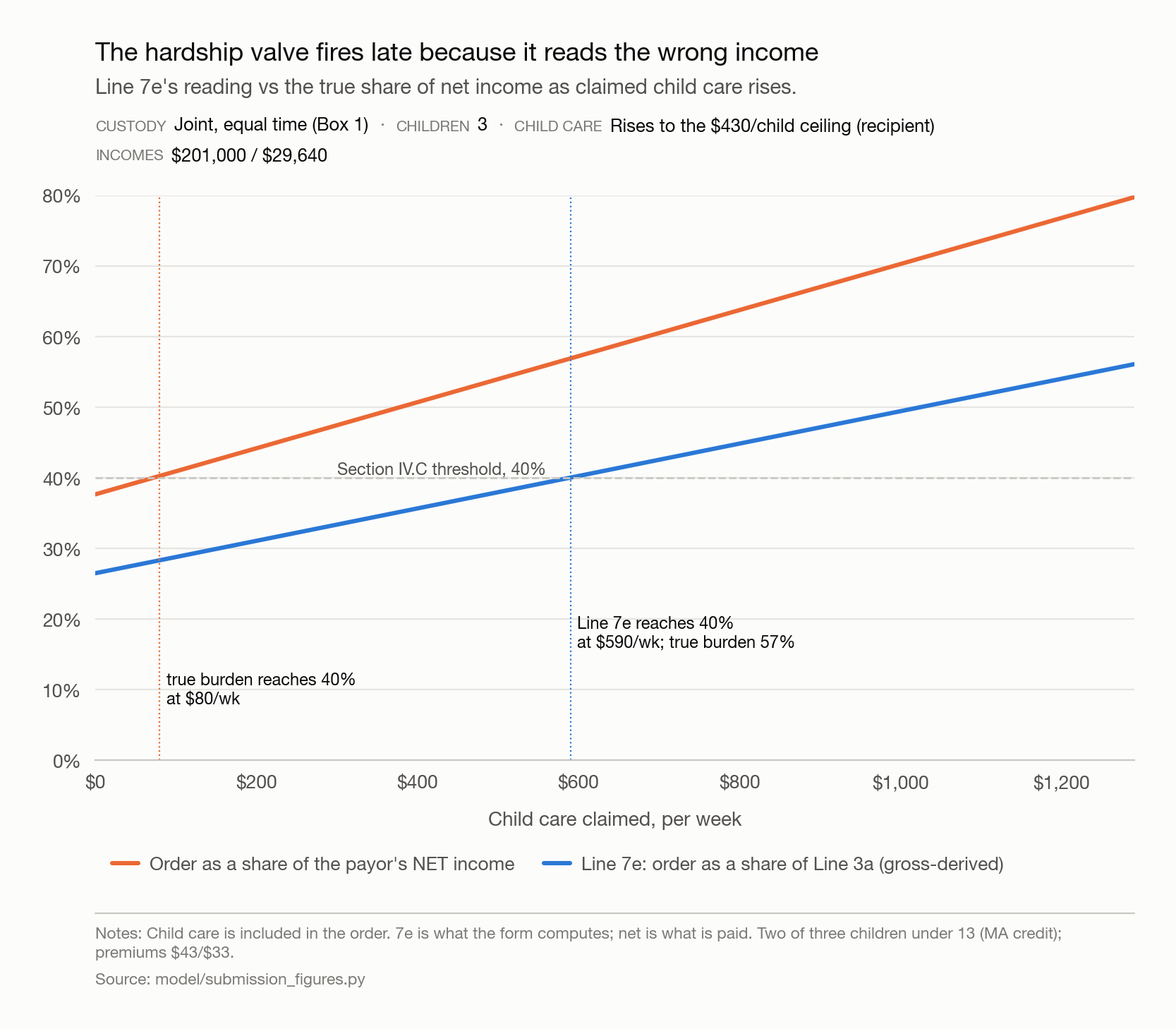
higher than federal law lets the state collect from wages (60% of take-home pay). Every one also trips Massachusetts’s own hardship rule, but only if a parent raises it and a judge agrees.
Shares of income pairs on a model grid, three children, primary custody, $100 a week of child care per child.
Read the federal-law finding →